
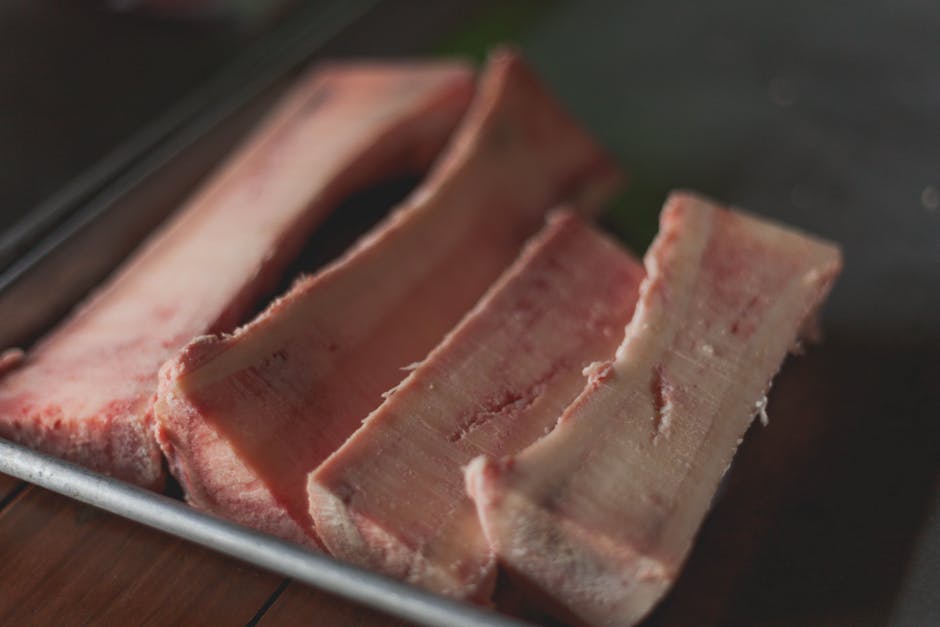
Roast bone marrow isn’t just a trendy restaurant appetizer — it’s one of the most nutrient-dense foods humans have consumed for hundreds of thousands of years. As a hematologist, I find this dish fascinating because it sits right at the intersection of food and blood science. The marrow inside your roasted beef femur bone is essentially the same tissue that produces every red blood cell, white blood cell, and platelet circulating in your body right now. When you eat it, you’re consuming a concentrated source of monounsaturated fats, collagen precursors, fat-soluble vitamins, and trace minerals that genuinely support blood health, joint integrity, and more.
So does roast bone marrow live up to the hype? Mostly, yes — with some caveats. Let’s break down exactly what’s in it, what the real benefits are, and who should think twice before ordering a second round.
What Exactly Is Bone Marrow — and What Happens When You Roast It?
Bone marrow is the soft, fatty tissue that fills the hollow centers of long bones like the femur and tibia. There are two types: red marrow (hematopoietic tissue that produces blood cells) and yellow marrow (primarily fat storage). The marrow you eat at a restaurant is almost entirely yellow marrow from adult cattle — roughly 96% fat by dry weight.
When you roast beef or veal bones at around 230°C (450°F) for 15–25 minutes, the marrow renders into a buttery, spreadable consistency. The high heat breaks down some collagen into gelatin and concentrates fat-soluble nutrients. The result is that rich, umami-forward flavor that chefs and food cultures worldwide — from French os à moëlle to Vietnamese phở — have prized for centuries.
Nutritional Profile: What’s Actually in a Serving?
A typical restaurant serving of roast bone marrow is about 2 tablespoons (roughly 30 grams) of rendered marrow. Here’s what you’re getting:
| Nutrient | Amount per 30g Serving | Why It Matters |
|---|---|---|
| Calories | ~110–130 kcal | Calorie-dense; a little goes a long way |
| Total Fat | ~12g (mostly monounsaturated) | ~55% oleic acid — the same healthy fat in olive oil |
| Protein | ~1–2g | Includes glycine and proline (collagen precursors) |
| Iron | ~0.5–1.0 mg | Heme iron — far more bioavailable than plant sources |
| Vitamin A (retinol) | ~50–80 IU | Supports immune function and vision |
| Vitamin K2 (MK-4) | Moderate amounts | Directs calcium into bones, away from arteries |
| Conjugated Linoleic Acid (CLA) | Trace–moderate (grass-fed higher) | Studied for anti-inflammatory and metabolic effects |
| Collagen/Gelatin | Variable (from connective tissue) | Supports gut lining, skin elasticity, joint health |
The standout here is the fat composition. About 55% of bone marrow fat is oleic acid, the same monounsaturated fatty acid that gives olive oil its cardiovascular reputation. A 2020 review in Nutrients confirmed oleic acid’s role in reducing inflammatory markers like IL-6 and TNF-α.
Real Health Benefits: What the Science Supports
1. Blood Health and Iron
Bone marrow provides heme iron, which the gut absorbs at a rate of 15–35% compared to just 2–20% for non-heme iron from plants. For someone with mild iron-deficiency anemia (ferritin below 30 ng/mL), incorporating heme iron sources like marrow alongside other iron-rich foods can meaningfully support hemoglobin synthesis. It won’t replace iron supplements for true deficiency, but it’s a legitimate dietary contributor.
2. Joint and Connective Tissue Support
The glycine and proline in marrow and its surrounding connective tissue are direct building blocks for collagen. Glycine also plays a role in glutathione production — your body’s master antioxidant. A 2019 study in Amino Acids found that glycine supplementation (roughly 3–5g/day) reduced markers of oxidative stress. You’d need to eat marrow fairly regularly to hit those levels from food alone, but it adds up when combined with bone broth and other collagen-rich foods.
3. Vitamin K2 and Cardiovascular-Bone Axis
This is the nutrient that doesn’t get enough attention. Vitamin K2 (menaquinone-4) activates osteocalcin (which pulls calcium into bone) and matrix Gla protein (which keeps calcium out of arteries). Animal marrow — especially from grass-fed cattle — is one of the few whole-food sources. Most Western diets are severely deficient in K2 compared to K1.
Who Should Be Cautious?
Bone marrow is not a free-for-all. A few groups need to pay attention:
- People with hyperlipidemia: A 30g serving has roughly 12g of fat. While predominantly monounsaturated, stacking multiple servings on top of an already high-fat diet can push LDL cholesterol higher in some individuals — particularly those with familial hypercholesterolemia.
- Gout-prone individuals: Bone marrow contains moderate levels of purines, which break down into uric acid. If your serum uric acid is already above 6.8 mg/dL, frequent consumption could trigger flares.
- Immunocompromised patients: Undercooked marrow (rare, but possible with short roasting times) could theoretically harbor bacteria. Always roast to full rendering.
Lab Tests Worth Checking If You Eat Marrow Regularly
If you’ve made roast bone marrow a weekly staple and want to track its impact, these are the relevant panels:
- Lipid panel (total cholesterol, LDL, HDL, triglycerides) — check every 6–12 months
- Serum uric acid — especially if you have a history of gout or kidney stones
- Ferritin and CBC — to monitor iron status and blood counts
- Vitamin D and calcium — relevant since K2 affects calcium metabolism
Practical Tips: Getting the Most From Roast Bone Marrow
- Choose grass-fed bones when possible. Grass-fed marrow has higher CLA and K2 content compared to grain-fed.
- Pair with acid and greens. A classic gremolata (parsley, lemon zest, garlic) isn’t just tradition — the vitamin C boosts iron absorption, and the parsley adds K1.
- Portion matters. One to two bones (roughly 2–4 tablespoons of marrow) once or twice a week is a reasonable amount for most adults.
- Save the drippings. The rendered fat from roasting is excellent for cooking vegetables and is more heat-stable than many seed oils.
Frequently Asked Questions
Is eating bone marrow good for your own bone marrow?
Not directly. Eating animal bone marrow doesn’t transplant stem cells into your body or regenerate your hematopoietic tissue. However, the nutrients it provides — iron, healthy fats, vitamin K2, and amino acids — do support the metabolic environment your bone marrow needs to produce healthy blood cells.
Can roast bone marrow help with anemia?
It can contribute modestly. The heme iron in marrow is highly bioavailable, and the fat content aids absorption of fat-soluble vitamins. But if your hemoglobin is below 10 g/dL or your ferritin is under 15 ng/mL, you likely need supplemental iron — not just dietary changes. Think of bone marrow as a supportive food, not a treatment.
How many calories are in a typical serving of roast bone marrow?
Approximately 110–130 calories per 2-tablespoon (30g) serving, almost entirely from fat. A full restaurant portion with two split bones can easily reach 250–400 calories before you add the toast.
Is bone marrow high in cholesterol?
Moderately. A serving contains roughly 10–15 mg of dietary cholesterol. Current evidence suggests that dietary cholesterol has less impact on blood cholesterol than previously believed for most people, but individuals with familial hypercholesterolemia or existing high LDL should still monitor intake.
Does bone broth provide the same benefits as roast bone marrow?
There’s overlap, but they’re not identical. Bone broth is richer in gelatin and minerals (from prolonged simmering of the bones themselves), while roast bone marrow delivers more fat, fat-soluble vitamins, and oleic acid. Ideally, both can have a place in a nutrient-dense diet.
Key Takeaways
- Roast bone marrow is a legitimately nutrient-dense food — rich in oleic acid, heme iron, glycine, and vitamin K2.
- Its fat profile is closer to olive oil than butter, with roughly 55% monounsaturated fat.
- One to two servings per week is a reasonable amount for most healthy adults.
- People with hyperlipidemia, gout, or uric acid above 6.8 mg/dL should limit intake and monitor labs.
- It supports but does not replace medical treatment for conditions like iron-deficiency anemia.
When to See a Doctor
If you’re eating bone marrow specifically to address fatigue, joint pain, or suspected anemia, get proper bloodwork first. A complete blood count (CBC), ferritin level, and inflammatory markers (CRP, ESR) can tell you far more than any dietary change alone. Food is powerful medicine — but it works best when you know what you’re actually treating.


