
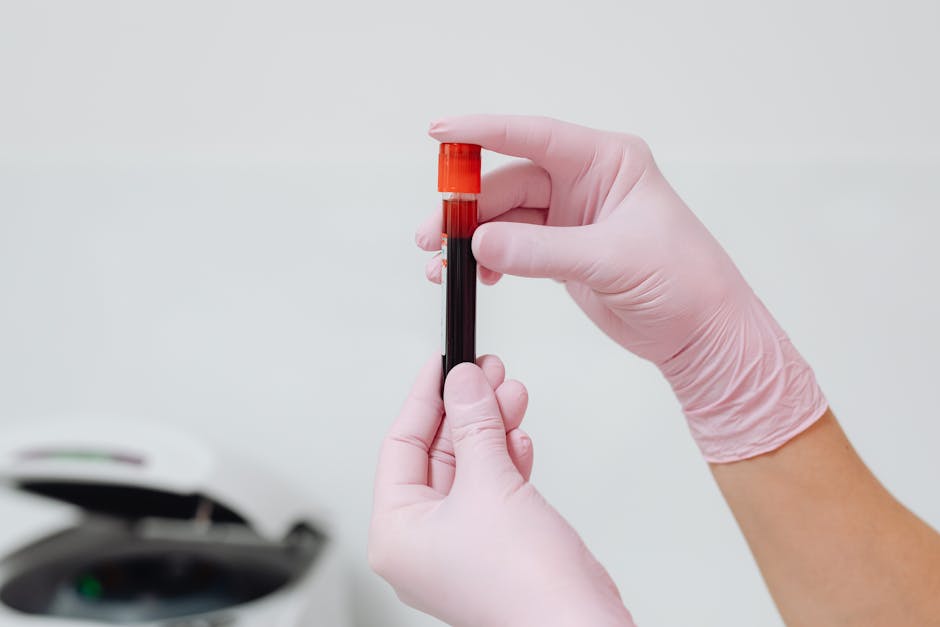
Guide to Hematology: A Comprehensive Guide to Blood Health”>Hematology is the branch of medicine focused on blood, blood-forming organs, and blood diseases. If your doctor has referred you to a hematologist — or you’re trying to figure out what this specialty actually does — here’s the short version: hematologists diagnose and treat conditions ranging from iron-deficiency anemia (the most common blood disorder worldwide, affecting roughly 1.6 billion people) to aggressive blood cancers like acute myeloid leukemia. They’re the specialists who interpret your complete blood count, order bone marrow biopsies, and manage everything from clotting disorders to sickle cell disease.
Whether you’re a medical student trying to get a handle on the field, a patient preparing for your first hematology appointment, or someone whose lab work came back abnormal, this guide breaks down what hematology covers, the key lab values you need to know, and the red flags that should prompt an urgent visit.
What Does a Hematologist Actually Do?
A hematologist is an internist or pediatrician who has completed an additional 2–3 year fellowship in hematology (often combined with oncology). They manage both benign hematologic conditions — think iron deficiency, vitamin B12 deficiency, blood clots — and malignant diseases like leukemia, lymphoma, and multiple myeloma.
Day to day, hematologists read blood smears under the microscope, interpret flow cytometry results, review bone marrow biopsies, and manage complex anticoagulation regimens. They work closely with pathologists, surgeons, and radiation oncologists.
You don’t always need a cancer diagnosis to see one. Many referrals are for unexplained anemia, recurrent blood clots, abnormal white blood cell counts, or bleeding that doesn’t stop normally.
7 Major Areas of Hematology
- Anemias — Low red blood cells or hemoglobin. Iron deficiency is the most common cause globally, but B12 deficiency, chronic disease, and hemolysis are all on the differential.
- Leukemias — Cancers of the blood and bone marrow. The four main types (ALL, AML, CLL, CML) behave very differently and have dramatically different prognoses.
- Lymphomas — Cancers of the lymphatic system, split into Hodgkin and non-Hodgkin subtypes. Hodgkin lymphoma has a 5-year survival rate above 87%.
- Coagulation disorders — Conditions like hemophilia A and B, von Willebrand disease, and acquired clotting factor deficiencies.
- Thrombotic disorders — Includes deep vein thrombosis (DVT), pulmonary embolism, and inherited thrombophilias like Factor V Leiden (carried by ~5% of Caucasians).
- Hemoglobinopathies — Sickle cell disease and thalassemias, which are genetic disorders affecting hemoglobin structure or production.
- Bone marrow failure syndromes — Aplastic anemia, myelodysplastic syndromes (MDS), and conditions requiring stem cell transplantation.
Key Hematology Lab Values You Should Know
The complete blood count (CBC) is the single most important test in hematology. Here are the normal reference ranges for adults:
| Lab Value | Normal Range (Adults) | What Abnormal Results May Suggest |
|---|---|---|
| Hemoglobin (Hgb) | Men: 13.5–17.5 g/dL; Women: 12.0–16.0 g/dL | Low → anemia; High → polycythemia |
| White Blood Cells (WBC) | 4,500–11,000/μL | High → infection, leukemia; Low → bone marrow failure, immunosuppression |
| Platelets | 150,000–400,000/μL | Low → ITP, leukemia, DIC; High → myeloproliferative disorder, reactive |
| MCV (Mean Corpuscular Volume) | 80–100 fL | Low → iron deficiency, thalassemia; High → B12/folate deficiency |
| Reticulocyte Count | 0.5–2.5% | High → hemolysis, acute blood loss; Low → bone marrow suppression |
| PT/INR | PT: 11–13.5 sec; INR: 0.8–1.1 | Elevated → warfarin therapy, liver disease, factor deficiency |
| Ferritin | Men: 24–336 ng/mL; Women: 11–307 ng/mL | Low → iron deficiency; Very high → hemochromatosis, inflammation |
A single abnormal value rarely tells the whole story. Hematologists look at patterns — for example, a low hemoglobin plus a low MCV plus a low ferritin points strongly toward iron-deficiency anemia, while a low hemoglobin with a high MCV and low reticulocyte count suggests B12 or folate deficiency.
Common Diagnostic Tests Beyond the CBC
When a CBC raises questions, hematologists go deeper:
- Peripheral blood smear — A trained eye looking at blood under the microscope can spot sickle cells, blast cells (immature leukemia cells), schistocytes (seen in TTP/HUS), and other morphologic clues that automated analyzers miss.
- Bone marrow biopsy and aspiration — The gold standard for diagnosing leukemia, MDS, myeloma, and aplastic anemia. A needle is inserted into the posterior iliac crest (hip bone) under local anesthesia. It’s uncomfortable but usually takes under 20 minutes.
- Flow cytometry — Uses laser technology to classify cells by their surface markers. Essential for subtyping leukemias and lymphomas.
- Coagulation panel — PT, PTT, fibrinogen, and D-dimer help identify clotting or bleeding disorders.
- Genetic and molecular testing — BCR-ABL for CML, JAK2 V617F for polycythemia vera, FLT3 and NPM1 mutations in AML. These results increasingly drive treatment decisions.
Symptoms That Should Send You to a Hematologist
Not every bruise needs a specialist. But certain patterns warrant evaluation:
- Persistent fatigue with a hemoglobin below 10 g/dL that doesn’t respond to iron supplements
- Unexplained bruising, especially large bruises appearing without trauma
- Recurrent nosebleeds lasting more than 20 minutes or requiring medical intervention
- A blood clot before age 40, or recurrent DVT/PE without a clear trigger
- Swollen, painless lymph nodes persisting for more than 2–3 weeks
- Night sweats drenching your sheets, combined with unintentional weight loss (>10% of body weight over 6 months)
- A WBC count above 20,000/μL without obvious infection, or blast cells seen on a blood smear
If your primary care doctor identifies any of these, a hematology referral is standard. Don’t wait for symptoms to resolve on their own — blood cancers in particular have better outcomes with earlier detection.
How Hematologic Conditions Are Treated
Treatment depends entirely on the diagnosis. A few examples:
- Iron-deficiency anemia — Oral iron (ferrous sulfate 325 mg daily) or IV iron infusions for patients who can’t absorb oral supplements.
- Chronic lymphocytic leukemia (CLL) — Many patients are on “watch and wait” for years. When treatment is needed, targeted therapies like ibrutinib and venetoclax have largely replaced older chemotherapy regimens.
- Deep vein thrombosis — Anticoagulation with direct oral anticoagulants (DOACs) like rivaroxaban or apixaban for 3–6 months, sometimes indefinitely for recurrent clots.
- Acute myeloid leukemia (AML) — Intensive induction chemotherapy (7+3 protocol), often followed by consolidation and potentially stem cell transplant in eligible patients. The median age at diagnosis is 68.
- Sickle cell disease — Hydroxyurea remains the backbone of therapy, but gene therapy (like Casgevy, FDA-approved in December 2023) is a potential cure for eligible patients.
Frequently Asked Questions About Hematology
What’s the difference between a hematologist and an oncologist?
Many hematologists are dual-trained in hematology-oncology and treat both blood cancers and benign blood disorders. Some hematologists focus exclusively on non-malignant conditions like clotting disorders or sickle cell disease. If you’re referred for anemia or a blood clot, don’t panic — it doesn’t automatically mean cancer.
Do I need a referral to see a hematologist?
In most insurance plans, yes — you’ll need a referral from your primary care doctor or ER physician. Some hematologists in private practice accept self-referrals, but check with your insurance first to avoid unexpected bills.
What should I bring to my first hematology appointment?
Bring all recent lab results (especially CBC, iron studies, and any imaging), a list of your current medications, and a written timeline of your symptoms. If you’ve had prior blood work done at different labs, bring those too — trends over time are often more informative than a single snapshot.
Can blood disorders be inherited?
Absolutely. Sickle cell disease, thalassemia, hemophilia, von Willebrand disease, and Factor V Leiden are all genetic. If a first-degree relative has a blood disorder, mention it to your doctor. Genetic counseling may be recommended before starting a family.
How often should I get a CBC done?
For healthy adults, a CBC is typically part of an annual physical. If you have a known hematologic condition, your hematologist will set the frequency — it could be weekly during chemotherapy or every 3–6 months for stable conditions like mild chronic anemia or well-controlled CLL.


