
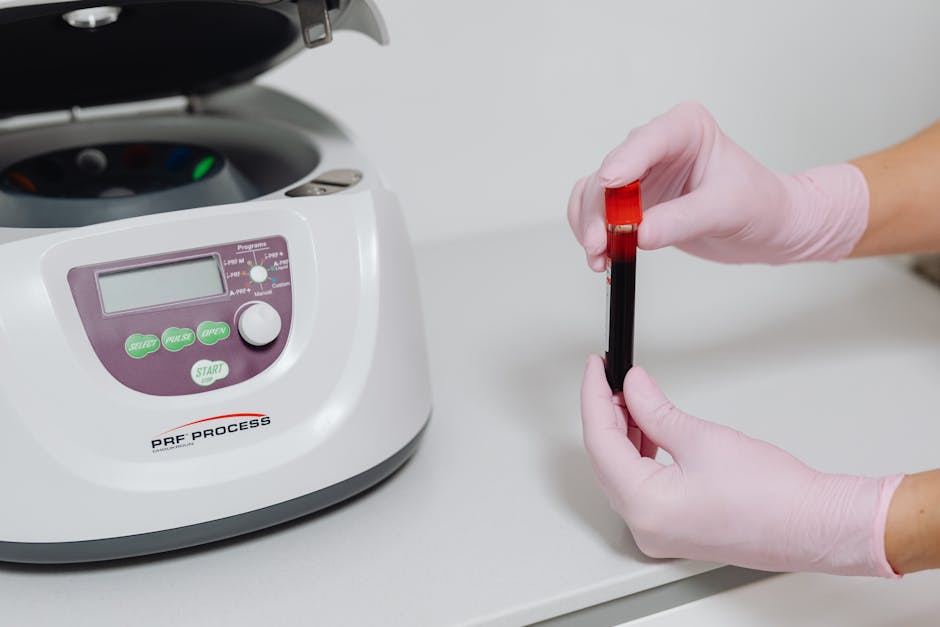
Erythrocytes is the scientific name for red blood cells — the most abundant cells in your blood. If you’ve ever glanced at a lab report and wondered what “erythrocyte count” or “RBC” means, it’s simply referring to these oxygen-carrying cells that keep every organ in your body alive. The term comes from the Greek words erythros (red) and kytos (cell).
Your body contains roughly 25 trillion erythrocytes at any given moment, and your bone marrow produces about 2.4 million new ones every second. That relentless production rate tells you just how critical these cells are — and why abnormal erythrocyte counts show up in so many different diseases.
What Makes Erythrocytes Different From Other Cells?
Red blood cells are biological oddballs. Unlike almost every other human cell, mature erythrocytes have no nucleus. They also lack mitochondria and most other organelles. This isn’t a defect — it’s a design trade-off. By ejecting the nucleus during development, the cell creates more internal space for hemoglobin, the iron-containing protein that actually binds oxygen.
Each erythrocyte packs approximately 270 million hemoglobin molecules. That’s an extraordinary density of oxygen-carrying capacity in a cell that measures only about 7–8 micrometers across (roughly one-eighth the width of a human hair).
Their signature biconcave disc shape — like a donut that didn’t get its hole punched all the way through — isn’t random either. That shape increases surface area by about 20–30% compared to a sphere of the same volume, allowing faster gas exchange across the cell membrane.
What Do Erythrocytes Actually Do?
The primary job is straightforward: pick up oxygen in the lungs, deliver it to tissues, and carry carbon dioxide back. But the biochemistry behind this is elegant.
- Oxygen transport: Hemoglobin binds O₂ in the high-oxygen environment of the lungs (where partial pressure of oxygen is ~100 mmHg) and releases it in tissues (where partial pressure drops to ~40 mmHg).
- CO₂ removal: About 70% of carbon dioxide is transported as bicarbonate ions, ~23% binds directly to hemoglobin (forming carbaminohemoglobin), and the remaining ~7% dissolves in plasma.
- pH buffering: Hemoglobin acts as a buffer, helping maintain blood pH within the narrow range of 7.35–7.45.
- Nitric oxide signaling: Erythrocytes help regulate blood vessel dilation through nitric oxide interactions — a function only appreciated in recent decades.
How Red Blood Cells Are Made: Erythropoiesis
The production process — called erythropoiesis — takes about 7 days from stem cell to mature erythrocyte. In adults, this happens exclusively in the bone marrow of flat bones like the pelvis, sternum, and vertebrae.
The master regulator is a hormone called erythropoietin (EPO), produced mainly by the kidneys. When your kidneys sense low oxygen levels, they ramp up EPO production, which signals the bone marrow to make more red blood cells. This is why chronic kidney disease so often causes anemia — damaged kidneys can’t produce enough EPO.
Once released into the bloodstream, erythrocytes circulate for about 100–120 days before aging cells are removed by macrophages in the spleen and liver. The iron from broken-down hemoglobin gets recycled back to the bone marrow — your body is remarkably efficient with iron.
Normal Erythrocyte Values on a Blood Test
A complete blood count (CBC) is the standard test that measures erythrocyte levels. Here are the normal reference ranges:
| Parameter | Normal Range (Men) | Normal Range (Women) |
|---|---|---|
| RBC count | 4.7–6.1 million cells/µL | 4.2–5.4 million cells/µL |
| Hemoglobin (Hb) | 13.5–17.5 g/dL | 12.0–16.0 g/dL |
| Hematocrit (Hct) | 38.3–48.6% | 35.5–44.9% |
| MCV (mean cell volume) | 80–100 fL | |
| MCH (mean cell hemoglobin) | 27–33 pg | |
| MCHC | 32–36 g/dL | |
| RDW (red cell distribution width) | 11.5–14.5% | |
Values outside these ranges don’t automatically mean something is seriously wrong, but they do warrant further investigation.
Common Erythrocyte Disorders
Too Few Red Blood Cells: Anemia
Anemia affects roughly 1.7 billion people worldwide, making it the most common blood disorder on the planet. It’s defined as hemoglobin below 13.5 g/dL in men or below 12.0 g/dL in women. The most frequent causes include:
- Iron deficiency anemia — the single most common type globally, often caused by blood loss, poor dietary intake, or malabsorption
- Vitamin B12 or folate deficiency — produces abnormally large erythrocytes (macrocytic anemia, MCV >100 fL)
- Anemia of chronic disease — seen in cancer, autoimmune conditions, chronic infections, and kidney disease
- Sickle cell disease — a genetic disorder producing crescent-shaped erythrocytes that block small blood vessels
- Thalassemia — inherited conditions where hemoglobin production is abnormal
Too Many Red Blood Cells: Polycythemia
Polycythemia occurs when erythrocyte production goes into overdrive. Polycythemia vera is a rare bone marrow cancer (driven by the JAK2 mutation in ~95% of cases) where the marrow makes too many red blood cells. Secondary polycythemia can result from chronic hypoxia (living at high altitude, severe lung disease) or EPO-producing tumors.
Elevated hematocrit above 48.6% in men or 44.9% in women thickens the blood and increases the risk of dangerous blood clots, stroke, and heart attack.
Symptoms That Point to an Erythrocyte Problem
Because red blood cells deliver oxygen to every tissue, abnormal levels affect the entire body:
- Persistent fatigue and weakness
- Shortness of breath with normal activity
- Dizziness or lightheadedness
- Pale skin, nail beds, or gums
- Heart palpitations or rapid heartbeat
- Cold hands and feet
- Difficulty concentrating or “brain fog”
- Headaches (especially with polycythemia)
When to See a Doctor
Request a CBC if you have unexplained fatigue lasting more than 2–3 weeks, especially combined with shortness of breath or pallor. If you’ve already been diagnosed with anemia or polycythemia, follow your doctor’s monitoring schedule — most cases require periodic blood work every 3–6 months.
Seek urgent medical attention if you experience sudden severe fatigue, chest pain, rapid heartbeat at rest, or confusion. These can signal critically low hemoglobin (below 7 g/dL) or dangerously high hematocrit with impending clot formation.
Frequently Asked Questions
Why are red blood cells called erythrocytes?
The name combines two Greek words: erythros meaning “red” and kytos meaning “hollow vessel” or “cell.” It was coined in the 19th century as scientists standardized medical terminology using Greek and Latin roots. In everyday medicine, “red blood cells,” “RBCs,” and “erythrocytes” are used interchangeably.
Why don’t erythrocytes have a nucleus?
Human erythrocytes expel their nucleus (and most organelles) during the final stages of maturation in the bone marrow. This frees up internal space to carry more hemoglobin — roughly 270 million molecules per cell. The trade-off is that mature erythrocytes can’t repair themselves or divide, which is why they only survive about 120 days.
How can I increase my red blood cell count naturally?
If your levels are mildly low, focus on iron-rich foods (red meat, spinach, lentils, fortified cereals), adequate vitamin B12 (meat, dairy, eggs), folate (leafy greens, beans), and vitamin C to enhance iron absorption. Staying well-hydrated and exercising regularly also supports healthy erythropoiesis. However, if your hemoglobin is significantly below normal, dietary changes alone may not be enough — talk to your doctor about whether supplementation or further workup is needed.
What’s the difference between RBC count, hemoglobin, and hematocrit?
RBC count is the actual number of red blood cells per microliter of blood. Hemoglobin measures the total amount of oxygen-carrying protein. Hematocrit represents the percentage of your total blood volume occupied by red blood cells. All three are reported on a standard CBC, and doctors look at them together — a discrepancy between them can point to specific diagnoses like thalassemia trait (normal RBC count but low hemoglobin).
Do other animals have nucleated red blood cells?
Yes. Mammals are the exception — birds, reptiles, amphibians, and fish all have nucleated erythrocytes. Even among mammals, camels and llamas have unique oval-shaped red blood cells rather than the typical biconcave disc. The evolutionary loss of the nucleus in mammalian erythrocytes is thought to have improved oxygen transport efficiency.


